Kotak Mahindra Bank was the biggest loser from the Sensex pack, skidding 1.83 per cent, followed by Axis Bank, NTPC, Hindustan Unilever, ICICI Bank, Bharti Airtel, Reliance Industries, HCL Technologies, IndusInd Bank and Nestle. In contrast, Bajaj Finance, Bajaj Finserv, Tech Mahindra, Tata Consultancy Services, Titan, Infosys, HDFC Bank, HDFC and ITC were the gainers.

Foundries in Taiwan account for more than 75 per cent of the chips that mobile devices made in India need, according to estimates by the Indian Cellular and Electronics Association (ICEA), which represents global and domestic manufacturers. The number is slightly lower, 60 per cent, if one considers all chips -- those of consumer electronics, PCs, laptops, autos, etc. This ties in with the fact that foundries in Taiwan, led by TSMC, account for over 70 per cent of the world's microchip supply, according to estimates by Gartner.

Smaller players manufacturing electric two-wheelers (E2Ws) are unlikely to raise prices of their models initially in 2024 in order to ensure volumes do not drop. The prices of E2Ws range from Rs 90,000 to Rs 1 lakh, the players being Lohia Auto, Godawari Electric, Emobi, etc. As India's E2W sector gears up to go past one million in 2024, manufacturers are likely to maintain price stability, underpinned by strategic independence from subsidies under Faster Adoption and Manufacturing of Electric (and Hybrid) Vehicles II (FAME II), localisation efforts, sustainability initiatives, and a focus on affordability.

Battered by the recent economic downturn, the Indian automobile industry is looking up to the newly elected government to implement some key measures to kickstart car sales. Top on their wish-list is ensuring availability of auto loans at lower rates of interest, continuation of some of the sops announced earlier in a stimulus package and a reduction in taxes.

Bajaj Auto was the top gainer in the Sensex pack, surging 3.95 per cent followed by Maruti Suzuki at 2.69 per cent.
From steel tycoon Lakshmi Mittal to billionaire Sunil Bharti Mittal's Airtel, Anil Agarwal's Vedanta, ITC, Mahindra and Mahindra, and a lesser-known Future Gaming and Hotel Services were among the prominent buyers of the now-scrapped electoral bonds for making political donations.

From its lows this month, the stock of Sona BLW Precision Forgings is up 10 per cent on better-than-expected results. The stock rose by 4 per cent in the trading session on Tuesday after Japan's Nikkei Group said the Indian automotive component major has topped its rankings in terms of competitive advantage. The rankings are based on sales, profit margin, capital expenditure, research and development, and market capitalisation.

At the car enthusiast's paradise, auto beauties from global manufacturers stole the show.

Indian auto component industry is expecting a slowdown in growth to 12-15 per cent in 2011-12 from over 34 per cent in the previous fiscal, Automotive Component Manufacturers Association of India said on Tuesday.
Here are the four most eye-catching offers from some of the most prominent brands.
Auto companies are looking forward to the continuation of incentives, including excise duty cuts, given in the two stimulus packages in the Budget 2009-10.

From the Sensex pack, Tata Consultancy Services, Reliance Industries, NTPC, Bharti Airtel, Power Grid, Larsen & Toubro, HDFC Bank, Kotak Mahindra Bank, Tech Mahindra and HDFC were the major laggards. Maruti, Tata Motors, Titan, UltraTech Cement, Bajaj Finserv, Mahindra & Mahindra, State Bank of India and IndusInd Bank were the biggest gainers.

India, the world's fifth largest economy in the world, is likely to overtake Japan to become the world's third-largest economy with a GDP of $7.3 trillion by 2030, S&P Global Market Intelligence said in its latest issue of PMI. After two years of rapid economic growth in 2021 and 2022, the Indian economy has continued to show sustained strong growth during the 2023 calendar year. India's gross domestic product (GDP) is expected to grow 6.2-6.3 per cent in the fiscal year ending in March 2024, being the fastest-growing major economy this fiscal year.
The government on Wednesday assured domestic and global auto companies all help such as granting SEZ status and a re-look at tax structure for setting up testing centres and manufacturing plants in a bid to make India the automotive hub of the world.
The benchmark Nifty and Sensex could see another 8-10 per cent from the current levels, said HDFC Securities in its outlook for equity markets in 2024. The brokerage said that the market movement in the next year will not be linear, and there will be more volatility. When asked about the market reaction to the General Elections in 2024, Dhiraj Relli, managing director and CEO of HDFC Securities, said more than the outcome of the elections, the market movement in the next three to four months will decide the market trajectory post elections.

Nifty50's earnings growth, estimated at 20 per cent by global research and brokerage firm Jefferies for financial year 2023-24 (FY24), will be amongst the top three in the Asian region, and is likely to outperform peers. Asean 40 index with 29.1 per cent estimated earnings growth and Straits Times Index (STI) with 29.1 per cent estimated earnings growth are the only two other indices in the Asian region that are likely to outperform India, suggests the recent Jefferies report, coauthored by Mahesh Nandurkar, their managing director along with Abhinav Sinha and Nishant Poddar.

Tata Motors is looking at various measures, including direct buying from stockists and making changes in the product configurations, to offset the impact of semiconductor shortage on its production activities and sales, a top company official has said. The auto major, which sells models including Nexon, Harrier and Safari in the domestic market, is also looking at different kinds of chips which could be used in components where the supply situation is severe. The automaker expects the situation to remain challenging in the ongoing quarter and some improvement in supplies only in the second half of the fiscal.
Jharkhand Chief Minister Arjun Munda on Monday said his government has a long-term plan to make the state the country's 'auto component hub.'

The German luxury carmarker on Tuesday said it will invest $50 million (about Rs 230 crore) to set up a financial services subsidiary to better serve its customers besides industry as a whole.

There's a hint of new competition riding into a sector that has attracted attention for being in a duopoly-like situation. Rapido, a commute app known for its budget-friendly bike-taxi services, on Tuesday announced its entry into the cab market, which is currently dominated by marquee brands Uber and Ola. Rapido's cab foray will be enabled by a software as a service (SaaS)-based platform.

Firm Asian cues and a higher opening of European markets reflecting a rally on Wall Street, where all three US indices hit new records following strong economic data, bolstered trading sentiments here

Abhijit Roy says second price rise is due to be effective from June.
While third quarter results do not reflect it, the sector's reluctance to cut interest rates points towards either high NPAs or wrong strategies.

The country's largest carmaker Maruti Suzuki India (MSI) aims to sell 4-6 lakh CNG units in the current fiscal year depending upon supply situation of essential components, as per a senior company official. The company sold about 2.3 lakh CNG units in 2021-22. MSI currently sells nine of its 15 models with CNG powertrain and is looking to drive in more models with such technology in the coming days.
Quite a few international players also have ambitious plans for the Indian roads.

Young, raw energy from India's engineering colleges on display!

Disappointed with the RBI decision of not reducing policy rates, carmakers and real estate players today said the sectors, which are already reeling under a slump, will continue to suffer due to the high interest rate regime.
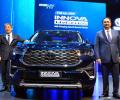
Hybrids have helped Maruti acquire leadership in SUVs, a segment that was never its forte. Toyota has also risen with the hybrid tide to clock its highest-ever annual sales in 2023.

Among the Sensex firms, Asian Paints, Tata Steel, HCL Technologies, Nestle, Maruti, JSW Steel, NTPC and Larsen & Toubro were the major laggards. Sun Pharma, Bajaj Finserv, Reliance Industries, State Bank of India and Bharti Airtel were the gainers.
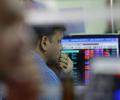
Equity benchmark indices Sensex and Nifty declined for the second straight session on Friday following selling in banking, financial and select IT shares amid a weak trend in global markets. The 30-share BSE Sensex dropped by 125.65 points or 0.19 per cent to close at 66,282.74 as 16 of its constituents fell and 14 advanced. The index opened lower and fell further by around 513 points to the day's low of 65,895.41 in morning deals.

About 1,800 workers at Rico Auto Industries, in Gurgaon near Delhi, ended their almost 50-day strike following an agreement with the management on reinstatement of some employees.

Benchmark BSE Sensex recovered from early lows to close at a five-month high on Friday, riding on gains in banking and auto stocks ahead of the release of key inflation data. The 30-share index gained 123.38 points or 0.20 per cent to settle at 62,027.90, the highest closing level since December 12, 2022. The barometer opened lower due to early weakness in energy, power and IT stocks and touched a low of 61,578.15 in the day trade.
According to the Auto Component Manufacturers Association, the apex body of component makers in India, global sourcing of components from the country will double from $2.95 billion to $5.9 billion in 2008-09, and is slated to hit $20 billion in seven years.
There are 230 million vehicles on the road, and counting. Bulk of these are under seven years old and once they get older, the industry estimates the requirement for spare parts and aftersales service to shoot up sharply.

Delhi, labelled the world's most polluted city in a 2014 World Health Organization survey, alone makes up about 7 per cent of total Indian auto sales.

In June, the new government led by Narendra Modi extended the excise duty concession by six months to December 31, which is not being further extended.

The company is willing to partner existing players; to begin with commercial vehicle launch.

Eleven companies have launched their initial public offerings (IPOs) in December 2023, making this month the second-best December for public offerings since 1996. Collectively, they are raising Rs 8,182.7 crore this month. In December 2021, 11 companies raised Rs 9,534 crore. However, excluding December 2021, this month marks the best December for IPOs since 1996.
Business is growing fast and continues to draw investment, but making big bucks in a country smitten with small cars won't be easy.
